

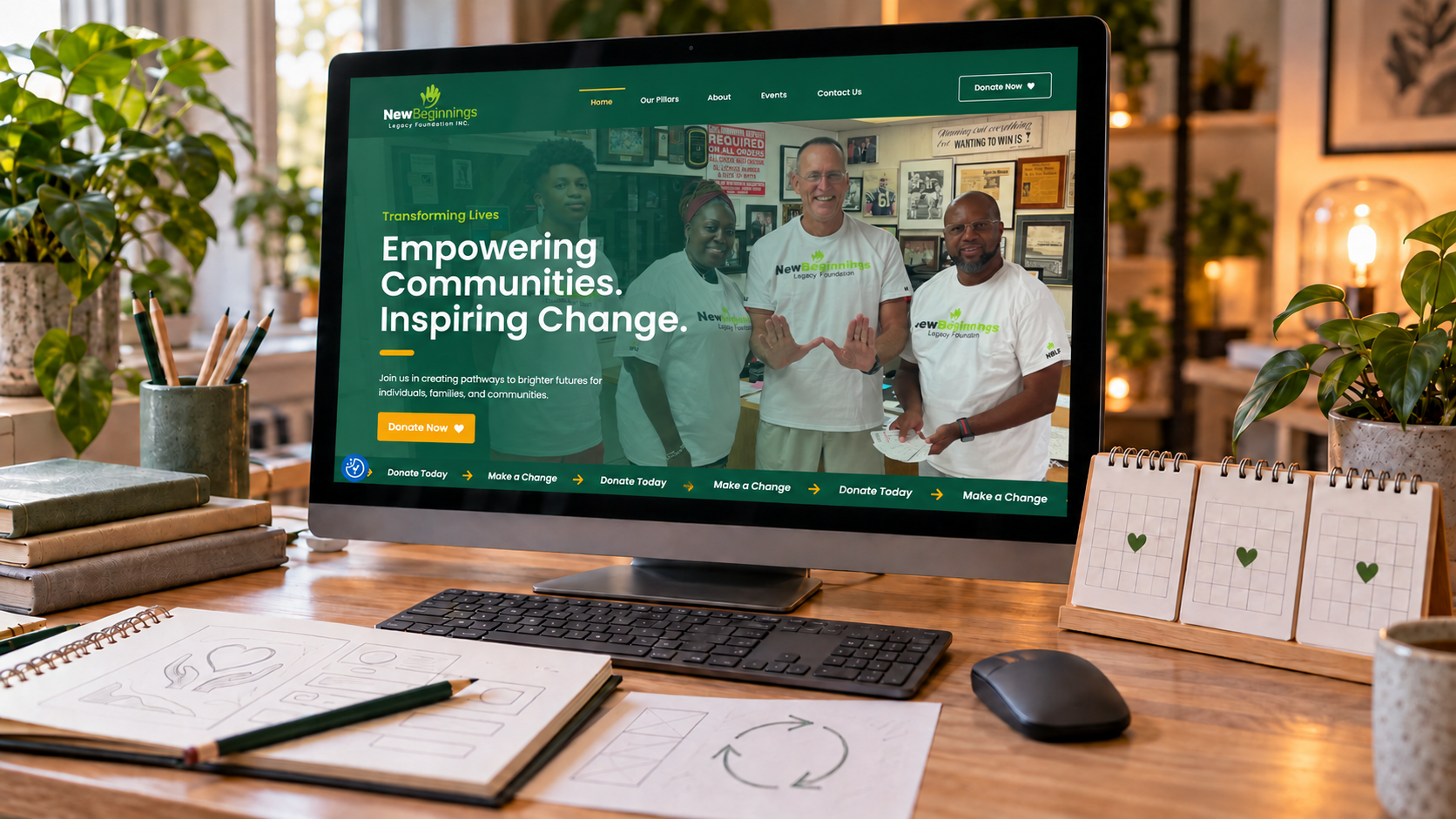
Optimizing donation funnels requires streamlined web design that prioritizes recurring giving. Nonprofits have seen a 42% increase in online giving over three years, per Blackbaud. Reyal Design builds sleek, fast websites that convert visitors into sustained supporters, ensuring every page drives seamless, repeat contributions.
Why Does Recurring Giving Matter for Your Mission?
A predictable revenue stream transforms a nonprofit’s ability to plan and execute its mission. Monthly donors provide stability that single gifts simply cannot match, funding ongoing programs without the anxiety of seasonal fundraising gaps. Organizations without this foundation scramble to cover core expenses, losing months of program impact to uncertainty. Reyal Design structures nonprofit donation page design to turn first-time visitors into committed recurring supporters.
The website operates as a nonprofit’s digital headquarters. Every visitor interaction represents a relationship the organization either builds or loses within seconds. When a donation page promotes monthly giving prominently, donors encounter a frictionless path to sustained commitment. An optimized experience converts passive interest into active, repeating support.
How Does Recurring Giving Strengthen Financial Planning?
Monthly contributions create a forecastable income baseline. Development teams allocate resources with confidence rather than waiting to see quarterly fundraising returns. Cash flow interruptions that delay programs shrink when recurring revenue covers operational essentials.
What Role Does the Online Experience Play in Sustaining Donors?
Online giving succeeds only when the process feels fast and effortless. A donation page cluttered with unnecessary fields or confusing options abandons donor intent at the critical moment. Reyal Design crafts strategic, unforgettable digital experiences that guide supporters smoothly from landing page to completed gift. The result is a giving journey that supporters repeat without hesitation.
What Makes a Donation Page Convert Visitors?
A donation page that converts transforms passive interest into confirmed gifts. Nonprofit donation page design succeeds when it removes every obstacle between a supporter’s impulse and a completed transaction. Donation forms serve as the most critical conversion point in an online fundraising strategy. They act as either a barrier or a catalyst for turning donor intent into action.
How Does Form Design Impact Donor Retention?
A poorly structured form drives supporters away before they finish giving. Donation form optimization increases an organization’s average gift size and donor retention rate simultaneously. The experience shapes how supporters perceive the giving process. Reducing friction and building trust guides donors toward completing their gifts without second thoughts.
Several design factors determine whether a form converts or repels visitors:
- Page load speed: A delay of even two seconds causes abandonment rates to spike.
- Visual clarity: Clean layouts signal professionalism and security to first-time donors.
- Mobile responsiveness: Forms that don’t adapt to phones frustrate the 63% of donors who prefer giving online with a credit or debit card.
- Minimal fields: Asking only for essential information respects the donor’s time.
Why Do Fast, Sleek Websites Matter for Fundraising?
Reyal Design builds websites that work as hard as the organization does. Every page loads fast and looks polished, making an immediate impression on visitors. A slow or cluttered donation page communicates disorganization, while a sleek interface projects competence.
The company streamlines the entire marketing process to deliver top-tier strategy and creative without traditional agency overhead. From brand refreshes to complete web design, the approach prioritizes speed and visual impact. For a development officer watching conversion metrics, this efficiency translates into more completed gifts and fewer abandoned forms. Organizations lose donations they never see reported when a page loads slowly or presents confusing navigation options.
How Can You Reduce Friction in the Giving Process?
Reducing friction in the giving process starts with nonprofit donation page design that removes every unnecessary step between donor intent and completed gift. Donation form optimization, when executed properly, increases average gift size and donor retention rate by improving how supporters experience online giving. A seamless experience leads directly to increased contributions.
Friction appears in many forms: long forms, confusing navigation, slow load times, and unclear calls to action. Each obstacle gives a potential donor another reason to abandon the page. Optimizing nonprofit websites for fundraising success ensures that every visitor has a smooth experience that leads to increased contributions.
What Elements Create the Most Friction on a Donation Page?
Three common friction points undermine conversion rates. First, forms that request excessive information beyond what is necessary to process a gift. Second, navigation that buries the donation button behind multiple clicks. Third, a lack of trust signals such as security badges or clear impact statements.
| Friction Source | Impact on Donor | Solution |
|---|---|---|
| Long forms | Abandonment before completion | Request only essential fields |
| Hidden donation button | Frustration and exit | Place CTA above the fold |
| No trust signals | Hesitation about security | Add badges and impact proof |
How Does Brand Strategy Reduce Friction?
A clear brand voice and vision make the giving process feel trustworthy and intentional. Reyal Design helps define a brand’s voice, craft a clear vision, and create a strategy that is bold and ambitious. That strategic clarity translates into donation pages where messaging, visuals, and user flow align without confusion.
The company turns wild ideas into smart strategies that move the needle and the audience. For nonprofit leaders, this means a donation experience that guides supporters toward completing their gifts rather than losing them to avoidable obstacles.
What Role Does Storytelling Play in Donor Retention?
Storytelling transforms one-time donors into long-term advocates. A structured narrative approach guides supporters from first discovering an organization to becoming committed partners in its mission. Fundraising is not just about collecting donations. It is about building relationships with people who share the nonprofit’s vision.
Nonprofit donation page design that incorporates storytelling keeps supporters engaged beyond the initial gift. Donors who connect emotionally with a cause return more often and give more generously over time.
Why Do Stories Matter More Than Statistics?
Numbers inform, but stories move people to act. A full-funnel fundraising strategy uses narrative to guide supporters through every stage of engagement. The relationship deepens as donors see themselves reflected in the organization’s work.
Reyal Design brings brands to life with crisp, striking visuals that capture attention quickly. These visuals anchor the story and make the mission tangible.
How Does Video Storytelling Strengthen Donor Relationships?
Video creates an emotional connection that static content cannot match. Reyal Design creates videos that let a story move people, from street-smart storytelling to high-end production. The goal is results: deeper engagement, stronger loyalty, and repeat giving.
A structured storytelling approach includes:
- Discovery: Introducing the mission through compelling visuals and narrative
- Connection: Showing donors the impact of their contributions
- Advocacy: Turning satisfied supporters into vocal champions
Organizations that skip storytelling lose the emotional thread that keeps donors invested. The relationship weakens, and retention suffers.
How Do You Build a Funnel That Keeps Donors Coming Back?
A full-funnel fundraising strategy turns one-time visitors into lifelong advocates. The marketing funnel breaks the supporter journey into stages, from raising awareness to building trust, inspiring action, and encouraging long-term involvement. Without a structured funnel, organizations lose donors who drift away after a single gift, never deepening their connection to the mission.
Each stage involves specific strategies to help guide supporters. The top of the funnel focuses on visibility and education. The middle nurtures interest through storytelling and proof of impact. The bottom converts that trust into recurring donations and volunteer commitments.
What Are the Key Stages of a Nonprofit Fundraising Funnel?
Awareness sits at the top, where potential supporters first encounter the organization. Trust-building follows in the middle, as consistent messaging and transparent reporting demonstrate credibility. Action happens at the bottom, when a donor completes a gift. Retention extends beyond the bottom, transforming a one-time donor into a recurring contributor and advocate.
How Does Design Influence Funnel Performance?
Every touchpoint in the funnel depends on clear, compelling creative execution. Reyal Design, a boutique creative agency with bold ideas and a refreshingly straightforward attitude, specializes in industries such as nonprofits. The agency crafts compelling campaigns that help these organizations connect with their target markets effectively. Reyal Design’s team mixes sharp strategy with top-notch creativity to help brands stand out and deliver results. A poorly designed donation page or inconsistent brand presence creates friction that pushes supporters out of the funnel before they convert.
Nonprofit donation page design plays a critical role at the action stage. The page must reduce friction, reinforce trust, and make completing a gift feel effortless. Reyal Design streamlines the marketing process to deliver top-tier strategy and creative, from brand refreshes to web design, all without the overhead of a traditional agency. The result is a funnel where every visual and strategic element works together to keep donors moving forward, not dropping off.
Conclusion
A donation funnel that removes friction, tells a compelling story, and guides supporters through each stage turns casual visitors into committed partners. The next step is auditing your current donation page for unnecessary fields, hidden calls to action, and missing trust signals. Apply these strategies to build a giving experience that keeps donors coming back.