

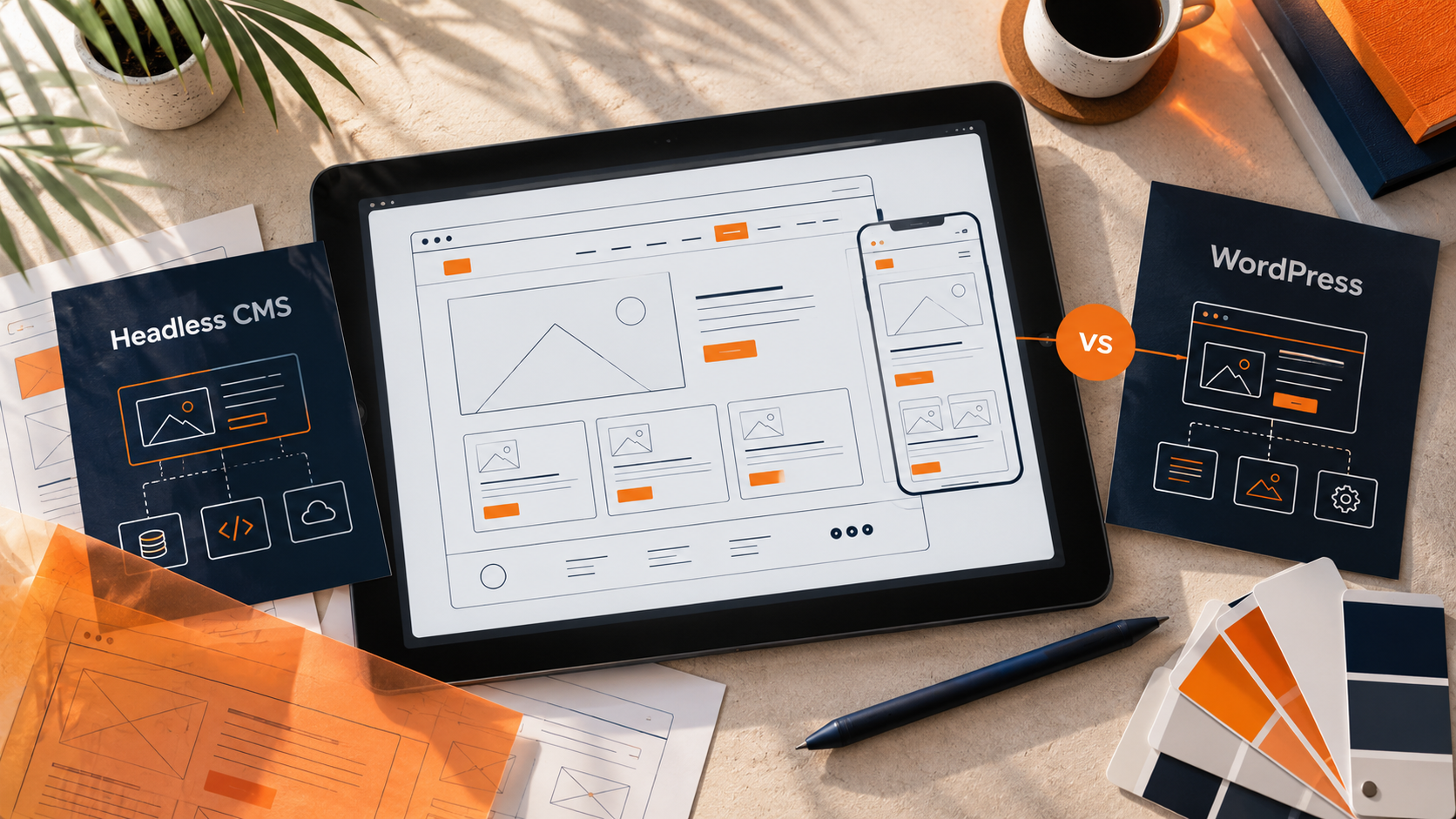
Choosing a headless CMS over traditional WordPress gives scaling businesses decoupled architecture for flexibility and API-driven content delivery. Purpose-built headless platforms integrate easily with modern tools, avoiding monolithic systems that struggle with high traffic and content volume. Reyal Design helps ambitious brands select the right stack for future-proof digital experiences.
Why does your CMS choice stall growth?
A content management system that cannot scale becomes a growth ceiling. Scaling businesses discover this ceiling only after traffic spikes and content volume overwhelm the platform. The Contentstack analysis reports that 73 million websites use a content management system, making the platform choice a widespread and high-stakes decision.
Traditional CMS platforms struggle with high traffic and content volume. This limitation directly restricts scaling businesses as they expand into new markets, launch additional product lines, or experience seasonal demand surges. The coupled architecture ties the front-end presentation layer to the back-end content repository, so every performance bottleneck compounds across the entire system.
What makes a traditional CMS hit a wall?
- Monolithic architecture couples front-end and back-end, limiting flexibility
- Scalability issues emerge under high traffic and growing content volume
- Vendor lock-in makes switching platforms difficult and costly
A headless CMS takes a different path. The API-driven approach delivers content through APIs for better performance, a key advantage for growing companies. Content flows to any channel without being confined to a single presentation structure.
How does custom web development south florida solve this?
Custom web development south florida teams evaluate whether a traditional or headless architecture fits the scaling roadmap. Reyal Design is a boutique creative agency that streamlines the marketing process to deliver top-tier strategy and creative, including web design, without traditional agency overhead. The company partners with ambitious brands to build websites that handle growth rather than resist it.
What breaks first in a monolithic CMS?
A monolithic CMS fails first at the integration layer. Scaling businesses discover this when their content management system cannot deliver consistent experiences across new channels without costly rework. The architecture itself creates the bottleneck.
Traditional CMS platforms use a monolithic architecture where the front-end presentation layer and back-end content database are tightly coupled. Contentstack’s 2024 analysis confirms this structural limitation: the two layers remain bound together, preventing independent updates to either side. When a scaling business launches a mobile app or digital kiosk, the CMS cannot push content to those endpoints without custom middleware or complete rebuilds.
Why does flexibility matter for growing companies?
Scaling businesses need content systems that adapt as channels multiply. Traditional platforms offer user-friendly interfaces that simplify initial setup, but that same simplicity becomes rigidity when requirements evolve. The interface constrains content to predetermined templates and layouts. Teams cannot repurpose content for new formats without duplicating efforts or hacking workarounds into the template system.
How does vendor lock-in trap scaling businesses?
Vendor lock-in compounds the problem over time. Contentstack’s research identifies platform switching difficulty as a core weakness of monolithic systems. Content, media assets, and custom configurations become entangled with the platform’s proprietary structure. Migration costs escalate with every month of operation. A scaling business that outgrows its CMS faces a painful choice: absorb the six-figure replatforming expense or continue operating with a system that limits growth.
WordPress exemplifies the tradeoff. NovaDB’s 2025 evaluation notes that WordPress delivers genuine ease of use for teams without deep technical expertise. The platform powers millions of sites through its accessible dashboard and plugin ecosystem. Yet that accessibility comes at a cost for organizations pursuing custom web development south florida projects or similar specialized builds. The architecture resists the custom integrations and headless deployments that modern omnichannel strategies demand.
How does headless architecture future-proof your stack?
Headless architecture decouples a content management system’s back end from its front-end presentation layer. This separation allows the same content to flow across websites, mobile apps, and IoT devices without rebuilding the content repository each time a new channel emerges. For scaling businesses, that architectural choice eliminates the costly replatforming cycles that monolithic systems force every few years.
What makes headless CMS integration different from traditional setups?
Traditional CMS platforms bind content creation and display together. A headless CMS delivers content through APIs, freeing developers to use modern frameworks like Next.js, Gatsby, and Nuxt.js for the presentation side. The result is a high-performance website built with tools optimized for speed, not constrained by a legacy templating engine. Scaling businesses gain the ability to swap front-end technologies as user expectations shift, without touching the content layer.
Can a headless CMS adapt to new technology as it emerges?
Headless platforms integrate with new technologies as they emerge, a characteristic that makes the architecture genuinely future-proof. When a new device category or digital touchpoint gains traction, the API-driven content hub connects to it without a ground-up rebuild. Organizations avoid the vendor lock-in that traps traditional CMS users on aging infrastructure. The content stays portable, and the development team stays agile.
How does headless architecture improve user experience across channels?
Separating content from presentation enables personalized and consistent experiences across every channel a brand operates. A scaling business delivers the same product descriptions, media assets, and campaign messaging to a web app, a mobile interface, and an in-store kiosk simultaneously. Customers encounter a unified brand presence regardless of where they engage, which reduces friction and strengthens retention as the digital footprint expands.
Should you decouple WordPress or go native?
The decision between decoupling WordPress and adopting a native headless CMS hinges on how content, frontend development, and digital experiences connect. Organizations no longer select a CMS based solely on publishing features. The evaluation now centers on how these three layers work together across every customer touchpoint.
A decoupled WordPress setup retains the familiar admin interface while serving content through APIs. A native headless platform is built API-first from the ground up. Both approaches power high-performance Next.js websites and omnichannel experiences, but they solve different problems and carry distinct operational tradeoffs. For scaling businesses, the wrong architecture creates bottlenecks that slow campaign launches and fragment brand consistency across channels.
What factors determine the right architecture for a growing business?
The right choice depends on a team’s existing workflows, technical requirements, and how much flexibility the digital ecosystem needs as it evolves. Teams comfortable with the WordPress admin panel often lean toward decoupling to preserve that familiarity. Organizations requiring maximum frontend freedom and minimal backend overhead gravitate toward native headless platforms.
Reyal Design partners with ambitious brands to support in-house teams and craft experiences that are both strategic and unforgettable. The company evaluates each client’s content operations before recommending an architecture, ensuring the technical foundation aligns with long-term marketing goals.
How do the two approaches compare side by side?
| Factor | Decoupled WordPress | Native Headless CMS |
|---|---|---|
| Content authoring | Familiar WordPress dashboard | Purpose-built editorial interface |
| API flexibility | Retrofit via plugins or custom work | API-first from day one |
| Frontend freedom | High, with developer effort | High, with native support |
| Operational overhead | Maintain WordPress core and plugins | Platform handles infrastructure |
| Best for | Teams invested in WordPress workflows | Teams prioritizing omnichannel delivery |
Scaling businesses in South Florida pursuing custom web development south florida solutions benefit from architecture that matches their growth trajectory. A decoupled approach preserves existing content investments. A native headless platform eliminates legacy constraints entirely. The wrong selection forces costly replatforming within 18 to 24 months as content demands outstrip the original architecture’s capabilities.
Which stack wins for your scaling roadmap?
The right stack depends on a scaling business’s needs, team capabilities, and long-term digital strategy. A wrong choice here locks a growing company into re-platforming costs and missed revenue opportunities that compound with every new channel added. NovaDB’s analysis confirms that the decision between WordPress and a headless CMS hinges on these three factors.
What makes WordPress the faster starting point?
WordPress provides an intuitive interface that lets teams manage content and customize websites with minimal technical knowledge. For a scaling business that needs a live site within weeks, this simplicity translates directly to speed. The platform’s plugin ecosystem and visual editors remove development bottlenecks that otherwise delay launch timelines by months.
When does a headless CMS become non-negotiable?
A headless CMS delivers superior performance and scalability for growing businesses. Contentstack’s research highlights that the decoupled architecture separates front-end presentation from back-end content management, enabling the same content to power websites, mobile apps, and emerging channels simultaneously. Scaling businesses adding new digital touchpoints avoid the content duplication and inconsistent branding that plague traditional setups.
| Factor | WordPress | Headless CMS |
|---|---|---|
| Time to launch | Days to weeks | Weeks to months |
| Technical skill required | Minimal | Developer-dependent |
| Multi-channel delivery | Limited | Native |
| Performance at scale | Degrades under load | Maintains speed |
Custom web development south florida teams like Reyal Design deliver web design and development as part of a broader digital marketing solution set. The company helps scaling businesses connect with target markets through strategic platform selection, whether that means a rapid WordPress deployment or a headless architecture built for multi-year growth trajectories. The stack that wins is the one aligned with where the business will be in 36 months, not just where it stands today.
Conclusion
The stack that wins is the one aligned with where the business will be in 36 months, not just where it stands today. Evaluate the team’s workflows and content operations before committing, then choose the architecture that supports the full omnichannel roadmap. A deliberate selection now prevents costly replatforming later, keeping campaign launches fast and brand consistency intact as the digital footprint expands.