

By Content team at Reyal Design, Reyal Design
Creating a robust strategic communication plan is essential for any brand striving for success. This plan not only outlines how to convey your brand’s message effectively but also ensures engagement with stakeholders. In an ever-evolving market landscape, a well-defined communication strategy can enhance brand reputation, foster customer loyalty, and streamline internal processes. This comprehensive guide will explore the key components necessary for developing a strategic communication plan, including its significance, various templates, and best practices for aligning your messaging across channels. Additionally, we will delve into stakeholder analysis and evaluation techniques that will allow for continuous improvement. By the end of this article, you’ll have actionable insights to create a tailored communication framework for your brand.
What Is a Strategic Communication Plan and Why Is It Crucial for Your Brand?
A strategic communication plan is a structured approach that an organization employs to convey messages effectively to its intended audiences. It integrates communication objectives with the overall goals of the organization. The significance of such a plan lies in its ability to provide clarity and consistency in messaging, allowing brands to navigate the complexities of communication with stakeholders. By establishing a clear framework, brands can anticipate potential challenges and opportunities, directly influencing stakeholder engagement and brand perception.
How Does a Brand Messaging Framework Define Your Communication Strategy?
A brand messaging framework acts as the backbone of your communication strategy, encapsulating your brand’s essence, vision, and values into a coherent narrative. This framework includes key elements such as brand voice, tone, and messaging pillars, which guide the development of effective campaigns. Successful application of a messaging framework ensures that all communications are aligned with the brand’s identity, leading to a stronger market presence and improved customer relationships. Notable examples include companies that have successfully positioned their narratives through consistent messaging, creating a lasting impact on their audiences.
What Are the Key Elements of an Effective Corporate Communication Plan?
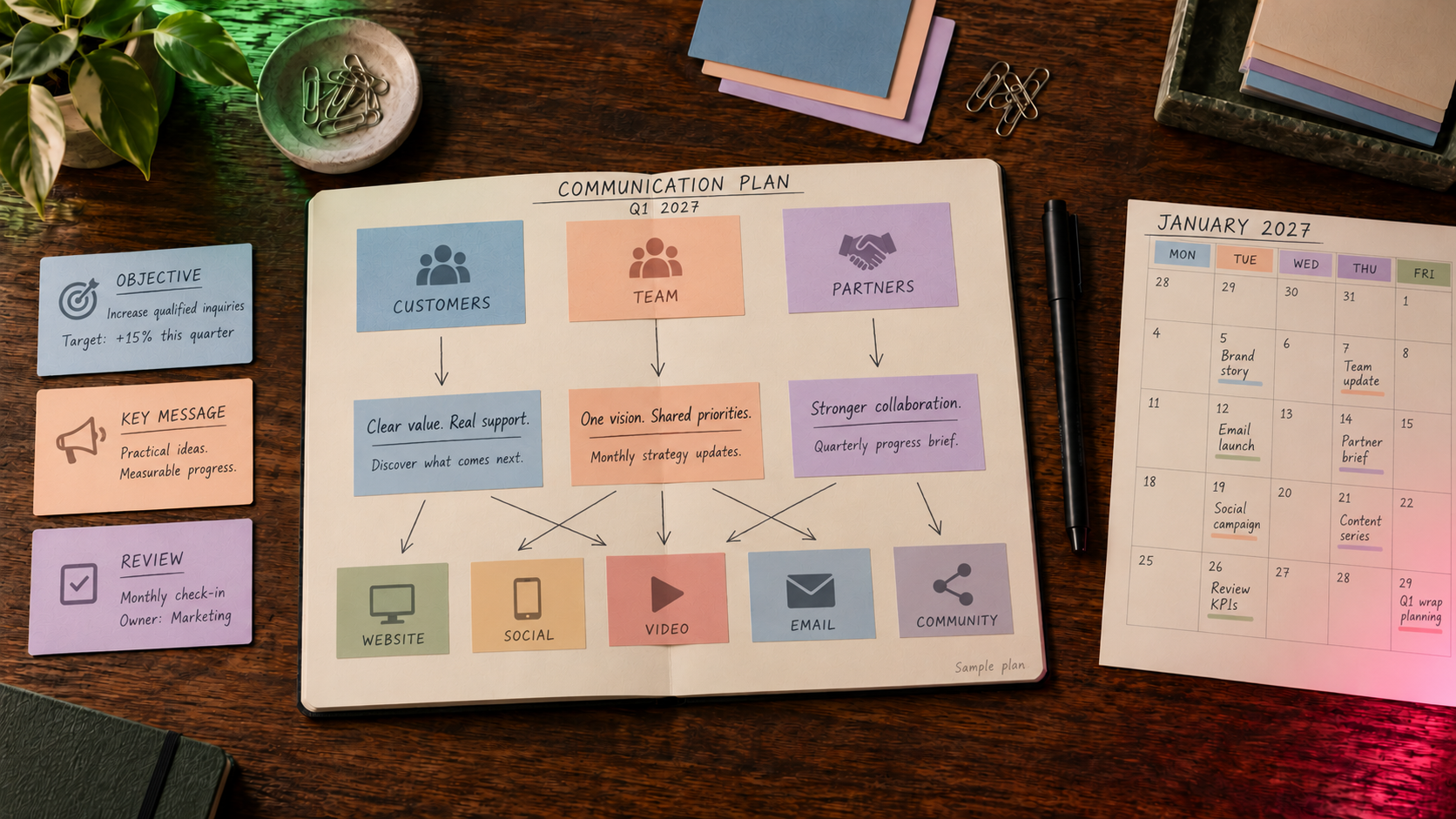
An effective corporate communication plan must encompass several critical elements that enable it to meet its objectives. These elements include:
Clear Objectives: Each communication should have a specific goal, such as raising brand awareness or improving stakeholder relations.
Target Audience Identification: Understanding who the messages are aimed at is crucial for effective outreach and engagement.
Channel Selection: Choosing the right platforms, whether digital or traditional, can influence the success of the communication plan.
Feedback Mechanisms: Incorporating ways to assess effectiveness allows brands to adapt and refine their strategies over time.
These core components ensure that a communication plan remains relevant and responsive to both internal and external shifts in the market.
How to Develop Your Brand’s Communication Strategy Using Templates and Best Practices?
Building a communication strategy can be streamlined through the use of templates and adherence to best practices. Templates offer pre-structured approaches that can reduce the time spent on planning and execution, allowing for quicker mobilization of messaging.
Which Communication Strategy Templates Accelerate Your Planning Process?
Utilizing templates can significantly accelerate the planning process for communication strategies. Common types of templates include:
Project Management Templates: These help organize tasks and timelines, ensuring all communications are delivered on schedule.
Content Creation Templates: Facilitating consistent messaging across platforms by providing guidelines on tone and voice.
Stakeholder Analysis Templates: These assist in mapping out key stakeholders, helping strategists communicate more effectively with specific groups.
By customizing these templates to fit the brand’s unique voice, time and resources can be optimized for sharing impactful messages.
What Best Practices Ensure Alignment Between Design, Marketing, and Messaging?
Ensuring alignment across design, marketing, and messaging is central to a successful communication strategy. Key practices include:
Regular Cross-Department Meetings: Keeping all teams informed about ongoing campaigns fosters collaboration.
Unified Brand Guidelines: Establishing clear guidelines ensures consistency in visual identity and messaging across all touchpoints.
Centralized Content Repositories: Providing a shared platform for content creation maintains a unified brand voice and facilitates easy access to resources.
Implementing these best practices not only enhances coherence but also leads to more effective stakeholder engagement.
Who Are Your Audience and Stakeholders? How to Conduct Segmentation and Analysis?
Understanding the audience and stakeholders is fundamental to tailoring communication effectively. Segmentation involves categorizing audiences based on specific criteria, allowing for more targeted messaging. This practice ensures that communications resonate with various segments, enhancing relatability and effectiveness.
Why Is Audience Segmentation Vital for Tailored Brand Communication?
Audience segmentation is vital as it enables brands to craft messages that speak directly to the needs and preferences of different groups. By segmenting audiences based on demographics, interests, or behaviors, organizations can create targeted campaigns that improve engagement and response rates. Techniques for segmentation may include surveys, analytics tools, and customer feedback.
How to Create a Stakeholder Communication Plan That Drives Engagement?
A well-crafted stakeholder communication plan integrates several essential elements. Start by identifying key stakeholders, including employees, customers, and investors. Next, outline communication objectives specific to each group, ensuring that their unique interests are addressed. Finally, establish a feedback loop that encourages stakeholder interaction, allowing for engagement that builds trust and fosters collaboration.
Which Marketing Communication Channels Should Your Brand Utilize for Maximum Impact?
Selecting the appropriate marketing communication channels is crucial for reaching the intended audience efficiently. The landscape of communication channels has expanded with digital progression, necessitating a thoughtful approach to channel selection.
What Factors Influence the Choice Between Digital, Internal, and External Channels?
Several factors play a role in selecting the right channels, including:
Audience Preferences: Understanding where your audience consumes content helps tailor channel strategies.
Message Type: The nature of the message being conveyed can determine channel effectiveness (e.g., visual content may suit platforms like Instagram).
Resource Availability: Companies must consider budget and staff expertise when choosing which channels to utilize.
Balancing these factors ensures a wide-reaching and effective communication plan.
How to Integrate Internal Communication Strategy with Overall Brand Messaging?
Integrating an internal communication strategy with the overall brand messaging is essential for maintaining cohesion within the organization. Internal communication sets the tone for how employees perceive and carry out the brand’s mission. Strategies for integration include:
Regular Updates: Keeping employees informed about company news ensures alignment with external messaging.
Training Programs: Offering training on brand values and messaging prepares employees to represent the brand accurately.
Feedback Mechanisms: Implementing internal surveys allows for assessing employee understanding and engagement with brand messages.
Such integration strengthens employee advocacy, ultimately reflecting positively on external communications.
Academic research further highlights how a focused internal communication strategy can significantly improve overall brand identity and organizational performance.
How Internal Communication Drives Brand Identity and Performance
This study reviews existing literature on the relationship between Internal Communication Effectiveness (ICE), Corporate Brand Identity Management (CBIM), and Brand Performance (BP) within the marine industry. Drawing on research in communication, branding, and organizational behavior, the paper applies maturity theory to explore internal branding and performance management. It emphasizes how communication effectiveness strengthens organizational identity and influences employee behavior, thereby enhancing sustainable brand performance. Bridging Internal Communication and Corporate Brand Identity: A Review of Brand Performance Dynamics in the Marine Sector, 2015
How to Measure and Optimize Your Strategic Communication Plan for Better ROI?
Tracking the effectiveness of your communication plan is necessary for informing future strategies and optimizing return on investment (ROI). Without measurement, organizations may struggle to identify strengths and weaknesses in their communication efforts.
What Metrics Define Communication Effectiveness and Brand Engagement?
Several key performance indicators (KPIs) can measure the effectiveness of communication and brand engagement, including:
Engagement Rates: Analyzing likes, shares, and comments on social media content reflects audience interaction.
Survey Feedback: Employee and customer surveys gauge understanding and reception of communication strategies.
Conversion Rates: Monitoring how many audience members take action after receiving communication helps assess impact.
These metrics offer insight into how well communication strategies resonate and what adjustments may be necessary.
How to Leverage Data and Case Studies to Refine Communication Strategies?
Utilizing data derived from past campaigns and case studies can provide invaluable insights for refining communication strategies. Analysis of previous efforts allows organizations to learn from successes and failures. Consider:
Identifying Patterns: Recognizing which types of content produced the highest engagement can shape future strategies.
Benchmarking: Comparing current results against industry standards provides context and setting realistic goals.
Continuous Feedback: Employing an iterative approach that incorporates ongoing data review ensures strategies remain dynamic and effective.
This data-driven approach enhances the ability to respond swiftly to changes in audience needs and market dynamics.
How Can Personalized Consultation Services Enhance Your Brand’s Communication Plan?
Personalized consultation services can significantly enhance a brand’s strategic communication plan by providing tailored insights and recommendations. Companies often face unique challenges that require specialized attention.
What Are the Benefits of Booking a Strategic Brand Communication Consultation?
Booking a communication consultation offers numerous advantages:
Expert Guidance: Access to seasoned professionals can help refine strategies and introduce innovative approaches.
Customization: Tailored solutions address specific challenges unique to a brand’s needs, maximizing effectiveness.
Long-term Impact: Strategic advice can lead to sustained improvements in brand positioning and stakeholder relationships.
These benefits underline the value of seeking external expertise in navigating complex communication landscapes.
How to Access Expert Guidance Through Consultation to Boost Brand Engagement?
To effectively access consultation services, brands should:
Identify Goals: Clearly articulate what they hope to achieve through consultation, whether it be strategy refinement or specific campaign planning.
Research Consultants: Look for professionals with relevant experience and a successful track record in the industry.
Establish Clear Expectations: Communicate desired outcomes from consultations to ensure all parties are aligned.
Taking these steps will help businesses leverage expert guidance for maximum engagement and effectiveness.