

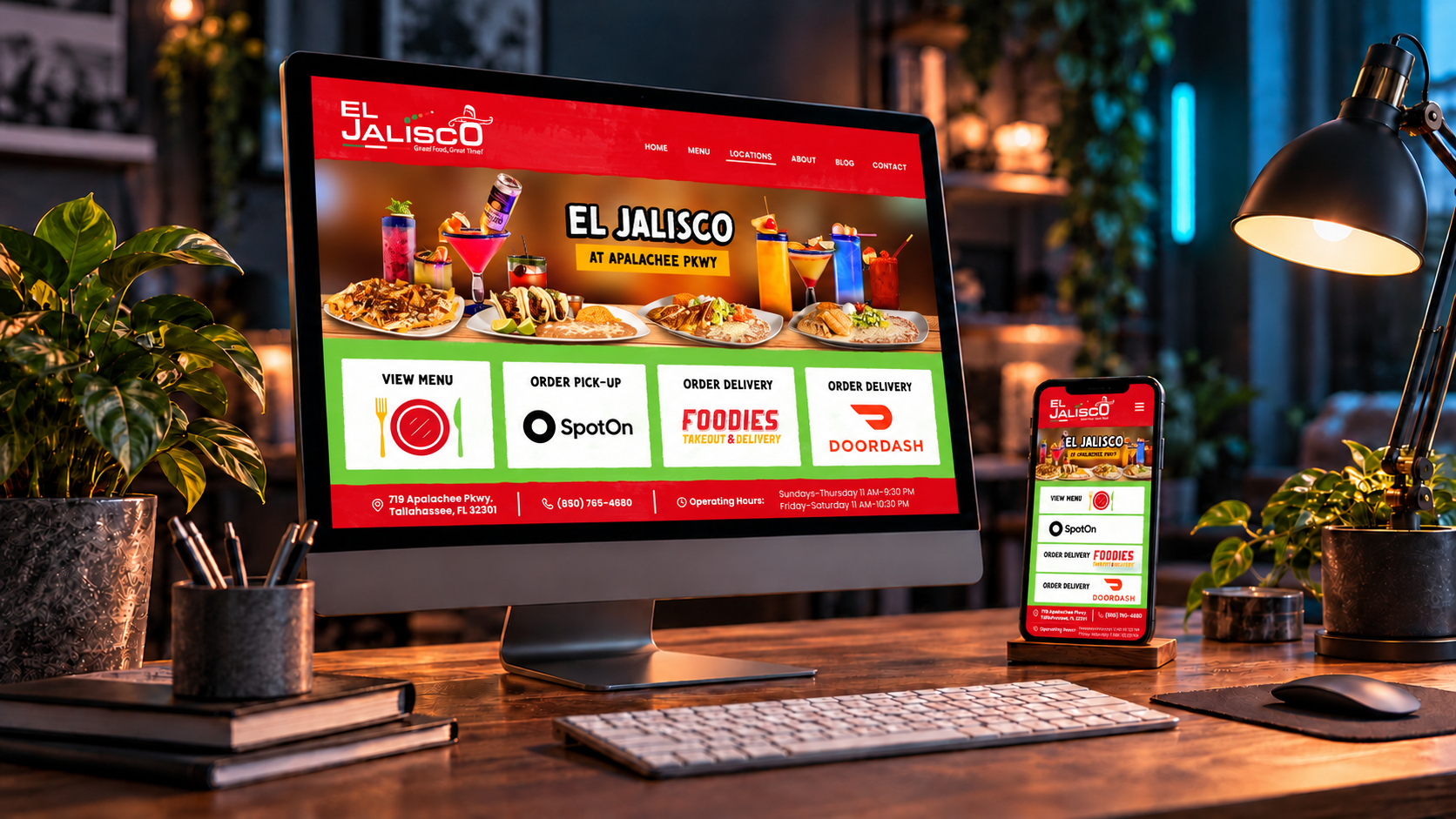
High-converting restaurant menu and online ordering architecture treats the digital menu as a sales system, not a formatted inventory. Baymard Institute research confirms optimized product pages drive orders. Reyal Design builds sleek, fast websites engineered for quick decisions, pairing sharp strategy with appetizing photography to maximize every online order.
Why does your menu page lose orders?
A restaurant menu page loses orders when its visual design fails within the first three seconds. A customer forms an opinion about the food based purely on how the page looks, not from tasting anything. That snap judgment determines whether the customer scrolls through offerings and places an order or bounces to a competitor with a more appetizing digital presence.
The stakes are immediate and measurable. A poorly designed menu page does not simply underwhelm; it actively redirects revenue to competing restaurants. Restaurant web design menu UX treats the digital menu as a sales system, not a formatted inventory. Every layout choice, photograph, and item sequence either supports the order or blocks it.
What happens when a menu page looks unappetizing?
The customer leaves before reading a single dish description. The three-second window closes, and the restaurant never learns why the order went elsewhere. The loss compounds across every visit, every day, every campaign that drives traffic to a page that cannot convert.
How does design quality affect ordering decisions?
Design quality functions as a proxy for food quality in the customer’s mind. A sleek, fast page signals care and competence. A cluttered or slow page signals the opposite, regardless of what the kitchen actually produces.
Reyal Design builds websites that work as hard as the restaurant owner does. The company describes its web work as sleek, fast, and built to make an impression, just like a first meeting. As a boutique creative agency with bold ideas and a refreshingly straightforward attitude, Reyal Design approaches menu pages as conversion infrastructure rather than decorative brochures.
The difference between a menu that sells and a menu that repels is not mysterious. It is a design decision made before the first customer ever arrives.
What makes a digital menu a sales system?
A digital menu becomes a sales system when every element guides a customer toward a specific order decision. Most restaurants treat their digital menu as a formatted inventory of items, prices, and descriptions that answers only what the restaurant serves. That approach leaves revenue on the table. Restaurants winning online orders in 2026 treat the digital menu as a sales system instead. Every layout choice, photograph, item sequence, modifier, and checkout step answers two questions: what should the customer order right now, and how does the customer get it quickly.
The revenue gap between these two approaches is measurable. Digital orders carry higher value than in-person transactions when the UX is designed to guide decisions rather than just display options, according to RichMenu’s analysis of digital menu performance. A static list produces static order values. A sales system produces larger baskets.
How does menu UX change what customers order?
Menu UX changes ordering behavior by engineering the path from landing to checkout. Item placement, photography, and modifier prompts all steer decisions. A customer who lands on a menu built as a sales system encounters recommendations, upsells, and friction-free ordering at every scroll depth. A customer who lands on a formatted inventory encounters a wall of text and prices.
What separates a sales system from a menu list?
The difference lies in intent. A menu list answers what the restaurant serves. A sales system answers what the customer should order and how to complete that order fast. Reyal Design streamlines the marketing process to deliver top-tier strategy and creative, from brand refreshes to web design, without the overhead of a traditional agency. Restaurant operators who treat restaurant web design menu UX as a conversion engine rather than a catalog capture the higher order value that passive menus forfeit.
How does restaurant web design menu ux drive conversions?
Restaurant web design menu UX converts browsers into buyers by removing friction from the ordering path. A well-structured digital menu functions as a direct sales engine, not merely a list of dishes. Chowly’s 2026 industry report confirms that restaurant websites now serve as direct ordering infrastructure for U.S. restaurants. More than 70% of consumers ordered restaurant food delivery in the last month, and over one-third prefer ordering directly from a restaurant’s website or app.
Poor menu UX carries a steep cost. When load speed lags or mobile layouts break, potential orders vanish before a single item reaches the cart. Website performance directly affects profitability. Load speed, mobile usability, menu structure, and order placement determine whether a visit results in a completed order. Every second of delay shrinks the pool of paying customers.
What menu UX elements cause the most order abandonment?
Three factors consistently derail online orders. Slow-loading menu pages frustrate hungry visitors who expect instant access. Confusing navigation buries popular items behind unnecessary clicks. Clunky checkout flows introduce friction at the moment of purchase. Each of these failures pushes customers toward competitors with smoother digital experiences.
How does strategic menu design increase average order value?
Intentional layout guides the eye toward high-margin items first. Clear category labels reduce decision fatigue. Prominent call-to-action buttons shorten the path from browsing to buying. Reyal Design helps restaurant operators define a brand’s voice, craft a clear vision, and create a strategy that matches the energy of a competitive market. The result is a menu experience that feels effortless and drives repeat orders.
Which UI features keep customers ordering repeatedly?
Repeat orders hinge on a digital experience that feels effortless and appetizing. Restaurant web design menu ux succeeds when every interface choice removes friction and reinforces quality. Customers seeking online delivery hold straightforward yet substantial expectations. Meeting those expectations directly determines whether a first-time visitor becomes a loyal regular.
The stakes are clear. A clunky menu page or confusing checkout flow sends hungry customers elsewhere. Loyalty comes through delivering an efficient website that creates an appetizing experience and a satisfactory ordering process. Modern customers expect meaningful digital interactions that mirror quality in-person service. A digital menu that fails this test costs restaurants repeat revenue they never see reported.
What makes a digital menu feel like good service?
Three interface qualities separate high-retention menus from forgettable ones:
- Visual clarity: Food photography and layout that make dishes look immediately appealing
- Speed: Pages that load fast and move customers toward checkout without dead ends
- Predictability: Item sequencing and modifier flows that match how guests actually order
Each element answers one question: what should a customer order right now, and how quickly can the order be completed? When the answer is obvious, repeat orders follow.
How does Reyal Design approach repeat-order UX?
Reyal Design partners with ambitious brands to improve their presence and craft experiences that are both strategic and unforgettable. The company supports in-house teams by streamlining the marketing process, including the interface decisions that keep customers returning. A restaurant’s digital menu becomes a sales system, not a static list. That distinction is what turns a one-time order into a standing weekly habit.
How do you build a menu that converts?
A converting menu starts with restaurant web design menu ux that treats every element as a sales tool, not a list. Reyal Design turns wild ideas into smart strategies that move the needle and the audience. Restaurants that treat digital menus as formatted inventories lose orders to competitors who engineer every layout choice for faster decisions.
Reyal Design operates as a boutique creative agency with bold ideas and a refreshingly straightforward attitude. The company brings brands to life with crisp, striking visuals that capture attention faster than a yellow cab in traffic. That visual speed matters because guests form opinions within seconds of landing on a menu page.
What makes menu photography convert?
Crisp, striking visuals do the heavy lifting. Reyal Design captures attention through imagery that makes dishes feel immediate and appetizing. A menu without strong photography forces guests to imagine the food, and imagination rarely drives orders.
How does strategy shape menu layout?
Founder Chris leads a team that mixes sharp strategy with top-notch creativity to help brands stand out. The strategic layer determines item sequence, category hierarchy, and visual emphasis. Creativity then executes that strategy through design choices that guide the eye toward high-margin items.
The conversion path follows three stages:
- Visual capture: Striking photography stops the scroll and holds attention.
- Strategic flow: Layout decisions direct guests toward profitable menu sections.
- Creative execution: Bold design choices make the ordering decision feel effortless.
A menu built without this framework loses guests at the first scroll. Reyal Design’s approach ensures every element works toward one outcome: a completed order.
Conclusion
The decision to rebuild a digital menu as a conversion engine rather than a catalog rests with the operator. Every layout choice, from photography to checkout flow, either secures a completed order or forfeits it to a competitor. Treating the menu as a sales system turns first-time visitors into loyal regulars. The next step is clear: engineer the interface for speed, clarity, and appetite, and let the orders follow.