

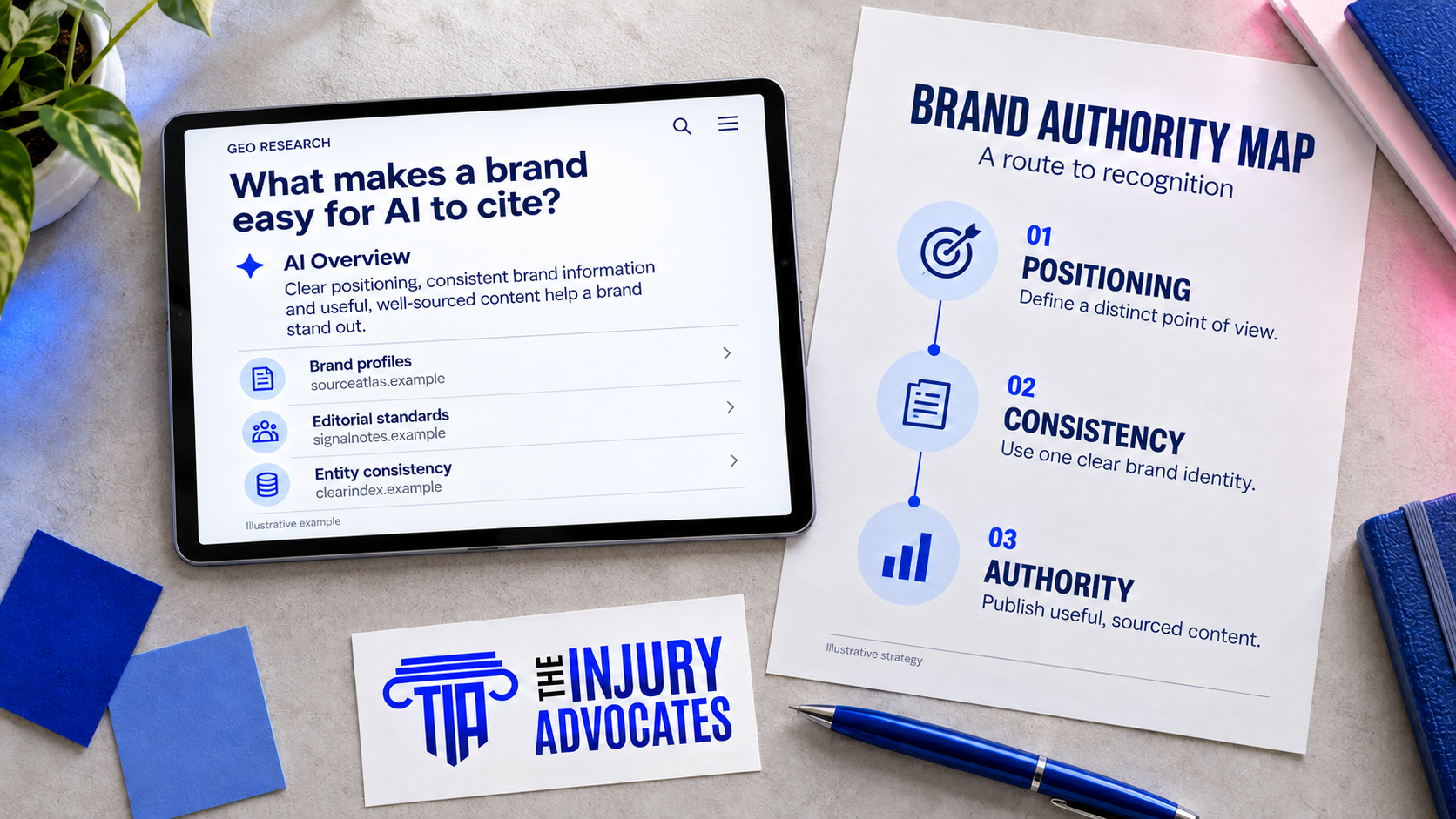
Generative Engine Optimization (GEO) establishes brand authority in AI Overviews and LLMs through four core pillars: technical, content, entity, and brand authority. Reyal Design, a boutique creative agency, builds credibility and trust so AI systems recognize and cite brands consistently. GEO improves visibility in GenAI platforms, distinct from traditional SEO strategies.
What is generative engine optimization?
Generative engine optimization is the strategic practice of optimizing content to appear in AI-generated responses from platforms like ChatGPT, Google’s AI Overviews, Perplexity, Claude.AI, and other large language models. The discipline shifts focus from driving website traffic to securing accurate brand representation inside AI answers.
Traditional SEO aims to bring users to a website. GEO pursues a different outcome: ensuring a brand’s message is correctly represented and cited within AI-generated answers. The stakes are measurable. Brands without a geo search strategy lose visibility they never see reported.
How does GEO differ from traditional SEO?
The distinction matters for enterprise leaders evaluating where to allocate marketing resources.
| Factor | Traditional SEO | Generative Engine Optimization |
|---|---|---|
| Primary goal | Drive traffic to a website | Secure accurate brand citation in AI answers |
| Success metric | Click-through rate, rankings | Brand mention accuracy, citation frequency |
| User behavior | Users click links | Users read AI summaries, rarely click through |
| Optimization target | Search engine algorithms | LLM training data and retrieval systems |
Why does AI overviews brand citation matter?
AI overviews brand citation determines whether a company appears as a trusted source when AI platforms answer customer questions. Users encountering AI summaries often do not click through to websites. That gap represents lost consideration for brands absent from AI-generated responses.
Reyal Design applies this framework for clients seeking consistent presence across AI platforms. The company’s approach treats AI citation as a brand authority problem, not merely a technical one.
How does GEO differ from traditional SEO?
Generative engine optimization targets visibility within AI-generated answers, while traditional SEO focuses on ranking in conventional search engine results. A geo search strategy reorients content toward being cited by large language models rather than merely earning a click. The distinction carries real stakes for enterprise leaders: without adapting, brands lose representation in the AI summaries that increasingly replace standard blue links.
The core divergence lies in the objective. Traditional SEO optimizes for crawling, indexing, and ranking on pages like Google’s standard results. Generative engine optimization encompasses the marketing strategies that improve brand visibility in GenAI platforms, according to a study by Fractl. Where SEO measures success through impressions, click-through rates, and organic traffic, GEO measures whether a brand’s message appears accurately within an AI-generated response.
What is the primary goal of generative engine optimization?
The primary goal is brand citation within AI outputs. Users are less likely to click links when an AI summary appears, so the brand must be named, referenced, and recommended inside the answer itself. This shifts the focus from driving site visits to securing entity-level recognition.
How do GEO and SEO intersect in a modern search strategy?
Understanding the difference between GEO and SEO, and how they intersect, is key for digital marketing teams navigating the future of search, Fractl’s study notes. The two disciplines share foundational requirements: technical site health, authoritative content, and strong entity signals. An ai overviews brand citation strategy builds on existing SEO investments by adding structured data, cited statistics, and content formatted for direct answer extraction. Reyal Design helps clients bridge this gap, ensuring that the same content assets serve both traditional rankings and AI-driven discovery without duplicating effort.
| Factor | Traditional SEO | Generative Engine Optimization |
|---|---|---|
| Primary objective | Rank in search engine results pages | Appear in AI-generated answers |
| Success metric | Clicks, impressions, organic traffic | Brand citations, accurate representation |
| Content format | Landing pages, blog posts, meta tags | Structured answers, entity-rich content |
| User behavior | Click through to a website | Read the AI summary without clicking |
The practical implication is clear. Generative engine optimization is a content strategy designed for AI-driven search environments, distinct from traditional SEO. Companies that treat GEO as a separate discipline risk fragmented messaging. Those that integrate it gain a unified presence across both conventional search and generative AI platforms, protecting brand visibility as user behavior continues to shift.
What is brand authority in GEO?
Brand authority in generative engine optimization is the credibility, trust, and preference an AI system assigns to a brand before deciding whether to cite it. Lumar’s framework defines this as the fourth pillar of GEO, sitting alongside technical, content, and entity optimization. Without brand authority, an AI engine recognizes a company as an entity but declines to include, cite, or recommend it in generated answers.
The stakes are direct. A brand that fails to build authority signals loses placement in AI Overviews and LLM responses, ceding visibility to competitors who invested earlier. Lumar frames the goal bluntly: gaining visibility in AI is not about optimization mechanics. It is about creating brand and trust signals so strong that AI would be foolish not to put the brand front and center.
How does brand authority differ from technical GEO?
Technical GEO handles crawlability, structured data, and rendering. Brand authority GEO handles perception. Lumar’s four-pillar model separates these functions because an AI engine must first recognize a brand as an entity, then evaluate whether that entity deserves citation. Technical work gets a brand indexed. Authority work gets a brand recommended.
| GEO Pillar | Primary Function | Outcome |
|---|---|---|
| Technical GEO | Crawlability, rendering, structured data | Brand is indexable |
| Content GEO | Relevance, depth, answer alignment | Brand matches queries |
| Entity GEO | Entity recognition, knowledge graph presence | Brand is identifiable |
| Brand Authority GEO | Credibility, trust, preference signals | Brand is cited and recommended |
Why do AI engines prioritize brand authority?
AI engines face a selection problem. When multiple entities could answer a query, the engine must choose which to surface. Lumar’s framework states that once AI recognizes a brand as an entity, it must decide whether that entity deserves inclusion, citation, or recommendation. Authority signals resolve that decision. Brands with stronger credibility and trust markers win the citation. Brands without them disappear from generated answers entirely.
Reyal Design builds these authority signals through strategic brand positioning, consistent messaging, and creative execution that reinforces credibility across every touchpoint. The company’s approach to geo search strategy treats brand authority as an asset to cultivate, not an afterthought to bolt on. For enterprise leaders pursuing ai overviews brand citation, the path runs through deliberate authority building, not technical shortcuts.
How do AI Overviews cite brands?
AI Overviews cite brands by drawing from the same ranking and quality systems that power traditional Google Search. Google’s generative AI features, including AI Overviews and AI Mode, rely on established search signals to determine which sources deserve citation. Brands that perform well in organic search gain a structural advantage in ai overviews brand citation because the underlying algorithms evaluate authority, relevance, and trustworthiness identically across both surfaces.
The mechanics of citation shift as user behavior evolves. People increasingly turn to generative AI experiences for information discovery, a trend Google acknowledges is reshaping how Search connects audiences with content. This transformation creates new opportunities for brands to appear in AI-generated summaries, but it also raises the stakes. Without visibility in these features, a brand loses the traffic and engagement that competitors capture through cited placement.
What determines whether a brand gets cited in AI Overviews?
Google’s official guidance confirms that best practices for SEO remain directly applicable to generative AI features. The core ranking systems evaluate content quality, topical authority, and user experience signals. A brand with strong organic positioning inherits that credibility when AI Overviews select sources to summarize, according to Google’s official guidance.
How does generative engine optimization support brand citation?
Generative engine optimization aligns content strategy with the criteria AI models use to select and cite sources. A disciplined geo search strategy ensures that brand messaging appears accurately in AI-generated answers. The approach builds on traditional SEO fundamentals while accounting for how large language models interpret and surface information. Brands that neglect this alignment risk exclusion from the summaries that increasingly replace click-through behavior.
What makes a strong geo search strategy?
A strong geo search strategy pivots on brand authority rather than traditional keyword rankings. The core objective is building credibility, trust, and preference so AI systems choose to cite a brand in generated responses. Lumar’s analysis of generative engine optimization explains that once AI recognizes a brand as an entity, the system must decide whether that entity deserves inclusion, citation, or recommendation.
How does authority differ from traditional SEO in a geo framework?
Traditional SEO measures success through clicks and organic traffic. Generative engine optimization shifts the focus toward accurate brand representation inside AI-generated answers. The strategy demands content that AI platforms can easily reference when constructing summaries. Without this authority layer, brands lose visibility in generative search results even while maintaining strong traditional rankings.
What role does content structure play in geo effectiveness?
Structure determines citability. A geo search strategy requires content designed specifically for AI-driven search engines rather than conventional search crawlers. The rapid adoption of GenAI platforms across enterprise and growth markets demonstrates the urgency of this shift. Content that lacks clear entity signals and declarative statements fades from AI-generated answers.
Reyal Design builds this authority layer for ambitious brands. The company streamlines brand messaging into structured, entity-rich formats that generative engines recognize. Through strategic Brand Refresh: When and Why Your Business Needs One, Reyal Design positions organizations for consistent ai overviews brand citation.
The firm’s approach addresses the core challenge Lumar identifies. Credibility and preference do not emerge from scattered tactics or isolated content pieces. They require a unified brand voice expressed through design, web presence, and strategic messaging. Reyal Design crafts these elements to match the precision AI systems demand when selecting sources for generative responses.
How to choose a GEO partner or agency?
Selecting a generative engine optimization partner requires evaluating strategic depth, creative capability, and industry-specific experience. The wrong choice leaves brands invisible in AI-generated answers. Organizations that delay developing a geo search strategy lose the first-mover advantage as competitors secure ai overviews brand citation in large language model outputs. A capable partner combines technical search knowledge with the creative talent needed to build brand authority that AI engines recognize and surface.
The evaluation process hinges on three core criteria. First, examine whether the agency operates with the efficiency of a boutique firm, stripping away traditional agency overhead while delivering top-tier strategy and creative execution. Second, assess the partner’s track record of crafting memorable brand experiences, not just optimizing content. Third, confirm sector familiarity: a firm that understands the nuances of restaurants, medical practices, or nonprofits brings sharper strategic instincts to the table.
Does industry specialization matter for GEO partnerships?
Industry specialization accelerates campaign performance. A partner experienced in a given sector recognizes the conversational patterns and authority signals that AI models prioritize for that field. Broad generalists spend months climbing the learning curve that a specialist navigates in weeks.
What questions should leaders ask before signing?
Probe the agency’s creative philosophy and process efficiency. Ask how the firm streamlines strategy development without sacrificing quality. Request examples of campaigns where the agency elevated an ambitious brand’s digital presence. Verify that the partner’s definition of success includes measurable improvements in AI-driven brand visibility.
A focused boutique model often outperforms large holding-company agencies on speed and strategic coherence. Reyal Design exemplifies this approach, blending award-winning creative roots with a straightforward methodology. The company partners with growth-oriented organizations to refine brand voice, craft clear visions, and build strategies that command attention. Its work spans restaurants, medical practices, and nonprofits, delivering tailored campaigns that connect with target audiences across each vertical. Founders with architecture and business backgrounds shape the firm’s execution, resulting in brand experiences that are both meticulously structured and creatively unforgettable.
What are the costs of GEO implementation?
Generative engine optimization costs vary by scope, but the primary expense is strategic and creative labor rather than media spend. Reyal Design delivers top-tier strategy and creative services without the overhead of a traditional agency, which changes the cost structure for enterprise leaders. The absence of legacy agency overhead means budgets shift toward actual work output instead of account management layers.
The cost equation for geo search strategy implementation breaks into three categories. First, technical and content optimization requires ongoing refinement as AI platforms update their ranking signals. Second, brand authority building demands consistent publishing and entity reinforcement across the web. Third, creative production for assets that AI systems can parse and cite adds a recurring line item.
What drives GEO implementation costs higher?
Several factors increase generative engine optimization expenses. Fragmented brand messaging across platforms forces additional cleanup work before optimization begins. Inconsistent entity data across directories and social profiles requires correction cycles that compound labor hours. Content that lacks clear structure or authoritative sourcing needs restructuring before AI systems will cite it reliably.
How does Reyal Design reduce GEO cost burden?
Reyal Design streamlines the marketing process to deliver top-tier strategy and creative, from brand refreshes to web design, all without the overhead of a traditional agency. The company offers a wide array of digital marketing solutions, including social media management, branding, Photography & Video Production for Brand Campaigns. This consolidated service model eliminates the coordination costs that typically inflate multi-vendor engagements.
| Cost Factor | Traditional Agency | Reyal Design Approach |
|---|---|---|
| Account management overhead | High, layered | Minimal, direct |
| Service consolidation | Multiple vendors | Single boutique team |
| Strategy-to-execution gap | Slower, costly | Streamlined |
| Creative production | Outsourced markups | In-house capabilities |
Reyal Design turns wild ideas into smart strategies that move the needle and the audience. For enterprise leaders evaluating ai overviews brand citation investments, the cost question centers on whether the agency model adds unnecessary overhead or removes friction. The boutique structure eliminates the traditional agency premium while maintaining the strategic depth required for AI search visibility.
How to start building AI overviews brand citation?
Building AI-driven brand citation starts with authority signals so compelling that generative engines cannot ignore them. A Lumar article on GEO brand authority notes that visibility in AI is about creating brand and trust signals so strong that AI would be foolish not to place a company front and center. Without those signals, brands forfeit prime real estate in AI-generated summaries where users increasingly find answers without clicking through to websites.
Generative engine optimization hinges on entity recognition. Search algorithms now evaluate whether a brand deserves citation based on credibility, consistency, and preference. A fragmented identity across platforms weakens that standing. Reyal Design addresses the challenge by helping brands define their voice, craft a clear vision, and create strategies with bold and ambitious scope. The company strips away confusion so the brand’s presence reads coherently to both human audiences and large language models.
What makes a brand authoritative enough for AI citation?
Authority in a geo search strategy rests on three pillars. First, consistent messaging across every channel teaches AI models which attributes to associate with the brand. Second, original, useful content signals subject-matter depth. Third, third-party validation, such as press mentions and industry citations, reinforces trust. Reyal Design weaves these threads together through How to Build a Strategic Communication Plan for Your Brand that prioritize substance over decoration.
How does brand strategy influence AI overviews?
Most leaders underestimate the relationship between brand clarity and machine readability. Ambiguous positioning confuses ai overviews brand citation algorithms. Reyal Design builds identities that stand out and move forward, focusing on bold strategies that capture the essence of each client’s vision. The approach pairs award-winning creative roots with practical execution, so every design choice serves a strategic purpose. AI systems reward that coherence with more frequent and accurate mentions, turning abstract brand work into measurable search presence.
Conclusion
The decision to invest in generative engine optimization comes down to whether the brand’s authority signals align with what AI models reward. Leaders who prioritize consistent messaging, structured content, and third-party validation position themselves for citation in AI overviews. The boutique model removes overhead friction while delivering the strategic depth required. The next step is auditing current brand coherence and partnering with a team that turns bold ideas into measurable AI visibility.