

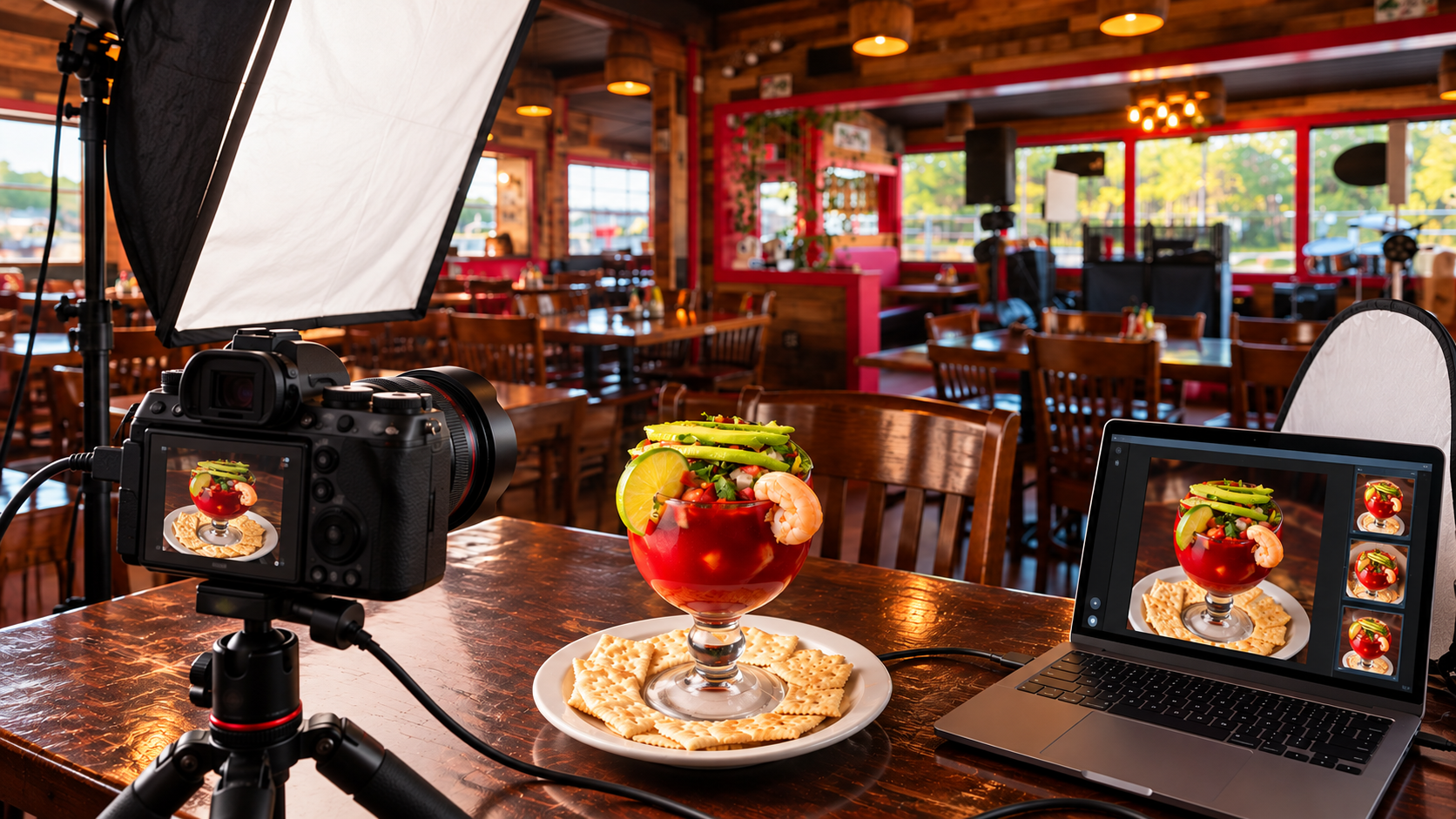
Professional food and beverage photography transforms restaurant menus into powerful marketing tools that entice and convert South Florida diners. Professional food photographers specialize in vibrant cocktail and plated entrée imagery that lifts brands across web and social platforms. Reyal Design partners with ambitious restaurants to craft strategic, unforgettable visual experiences.
Why does food photography drive restaurant sales?
Professional food and beverage photography entices, engages, and converts potential customers. A vibrant cocktail, a beautifully plated entrée, or a freshly baked pastry creates immediate visual appeal that drives ordering decisions. Restaurants without compelling imagery lose diners before a single reservation is made.
High-quality images of ingredients and dishes elevate a customer’s perception of a restaurant. The visuals associate the establishment with professionalism and attention to detail. A menu with amateur photos signals carelessness, while polished photography communicates culinary standards worth paying for.
How does food photography shape first impressions?
Exceptional imagery directly impacts first impressions, menu appeal, social media traction, and website conversion rates. Diners judge a restaurant’s quality within seconds of viewing its online presence. Weak visuals push potential guests toward competitors with stronger presentation.
Restaurant food photography campaigns deliver measurable returns across every customer touchpoint. Reyal Design creates crisp, striking visuals that capture attention quickly for brands. The company’s photography work brings restaurant menus, websites, and social feeds to life with imagery that stops scrolling and starts ordering.
What happens when restaurants skip professional photography?
Restaurants lose the conversion power that professional imagery provides. The absence of enticement, engagement, and conversion-ready visuals means fewer menu views turn into seated guests. Settling for less-than-stunning images yields the opposite of the intended effect.
Strategic visual execution produces assets that perform across websites, menus, social media, paid campaigns, and press features. Reyal Design crafts visual experiences that sell atmosphere, taste, and identity for ambitious hospitality brands.
What makes commercial food photography different?
Commercial food photography builds images around a specific business outcome. Every shot serves advertising, packaging, menus, or marketing rather than personal expression. The stakes escalate quickly: a menu image that fails to trigger appetite loses a diner during the brief scan of the page. Restaurants without this strategic asset watch competitors capture attention and revenue that never comes back.
What separates commercial work from editorial or amateur food photography comes down to structure and rights. Restaurant food photography campaigns built for commercial use follow client-driven briefs. A creative director or marketing lead defines the shot list, the lighting mood, and the emotional takeaway long before the camera appears. Licensing and usage rights also enter the picture, a distinction that amateur and editorial work sidesteps entirely. Commercial images carry terms about where, how long, and on what platforms a restaurant can use them.
Reyal Design integrates this commercial-grade photography into a wider suite of digital marketing services. The agency focuses on industries such as restaurants and helps them connect with target audiences through strategic visual assets. Rather than standalone photos, clients receive imagery wired into broader brand refreshes, web design, and social media campaigns.
Why do usage rights matter in commercial food photography?
Usage rights define where and how a restaurant deploys its images. Without a clear license, a photo shot for a menu cannot legally appear on a billboard or social ad. Commercial agreements protect both the photographer and the brand, turning a single shoot into a controlled, multi-channel asset.
How does commercial food photography support a restaurant’s marketing strategy?
It transforms the menu from a list into a persuasion tool. High-impact visuals feed social feeds, website galleries, and paid ads with consistent, appetite-driven content. Reyal Design, which specializes in the restaurant sector, ties photography directly into strategic campaigns so each image pulls its weight across every platform.
How do you plan a winning restaurant shoot?
A winning restaurant shoot starts with a clear strategic purpose. Reyal Design plans restaurant food photography campaigns around the specific business goal, whether that means refreshing a menu, launching a new concept, or building a social media presence. A well-photographed menu conveys the ambiance and theme of a restaurant, making it integral to the customer’s decision-making process. Without that visual clarity, diners scroll past, and the restaurant loses the chance to shape perception before the first reservation.
What should a restaurant shoot capture beyond the food?
The shoot must capture atmosphere, identity, and the feeling of dining in the space. Reyal Design blends sharp strategy with top-notch creativity to help brands stand out. The agency partners with ambitious brands to craft experiences that are both strategic and unforgettable. That means every frame, from a cocktail pour to a plated entrée, reinforces the restaurant’s voice rather than just documenting a dish.
How does a boutique agency approach shoot planning differently?
Reyal Design streamlines the marketing process to deliver top-tier strategy and creative without the overhead of a traditional agency. The planning phase covers shot lists, styling direction, lighting approach, and post-production workflow. Each decision ties back to where the images will live: menus, websites, paid campaigns, or press features. Restaurants that skip this planning step end up with beautiful but disconnected images that fail to move customers toward a booking.
What should your food photography campaign include?
A complete restaurant food photography campaign needs more than beautiful plates. It needs assets built to perform across every customer touchpoint. Professional photography produces work that functions on websites, menus, social media, paid campaigns, and press features. Restaurants that skip this strategic foundation lose the visual consistency that drives reservations and repeat visits.
What types of assets belong in a restaurant photography campaign?
A campaign should deliver a coordinated set of images, not a scattered collection. Reyal Design crafts compelling campaigns designed for each sector, including restaurants. The agency pairs bold creative direction with practical execution.
- Menu photography that makes dishes look irresistible at point of decision
- Website imagery that sets the dining atmosphere before a guest books
- Social media content built for engagement and shareability
- Paid campaign visuals that stop the scroll and drive clicks
- Press-ready photography that meets editorial standards
How does social media fit into the campaign?
Social media is where restaurant photography lives or dies. Reyal Design helps clients own the feed with content that keeps audiences engaged. Snappy captions and reels extend the life of every photo shoot. A single session should produce enough variety to sustain weeks of posting without repetition.
What separates a strategic campaign from a simple photo shoot?
Strategy separates the two. Reyal Design turns wild ideas into smart strategies that move the needle and the audience. A strategic campaign plans each shot around where the image will appear and what action it should trigger. Without that planning, restaurants end up with pretty pictures that fail to convert.
How do you measure photography campaign success?
Measuring restaurant food photography campaigns starts with tracking how professional imagery shifts customer behavior and brand perception. Restaurants that invest in professional food photography enhance their appeal, increase customer satisfaction, and potentially boost sales. Without clear measurement, a restaurant risks spending on visuals that never convert.
What metrics reveal whether food photography is working?
Three indicators separate effective campaigns from decorative ones:
- Conversion lift: Compare menu item orders before and after new photography launches. Dishes with professional images typically outperform text-only listings.
- Engagement depth: Track time spent on menu pages, social saves, and shares. High-end hospitality brands invest in professional photography because it directly impacts brand memorability and perceived prestige.
- Repeat visit rate: Customers who connect emotionally with imagery return more often. Satisfaction gains show up in review sentiment and reservation frequency.
How does brand perception factor into campaign success?
Perception drives measurable outcomes. Reyal Design, founded by experienced creatives with roots in graphic design and award-winning campaigns, builds photography strategies that make brands stand out and move forward. The agency’s approach ties visual assets to business goals, not just aesthetics.
A campaign succeeds when imagery elevates how customers describe the restaurant. Strong photography shifts language from “good food” to “unforgettable experience.” That shift precedes revenue growth and justifies the investment.
Conclusion
The decision to invest in commercial food and beverage photography comes down to whether a restaurant wants images that merely document dishes or assets that drive reservations. A strategic campaign, planned around business goals and built for every touchpoint, turns a menu into a persuasion tool and a feed into a conversion engine. Restaurants that commit to this approach gain visual consistency, stronger brand perception, and measurable results. The next step is clear: plan the shoot around the strategy, not the other way around.