

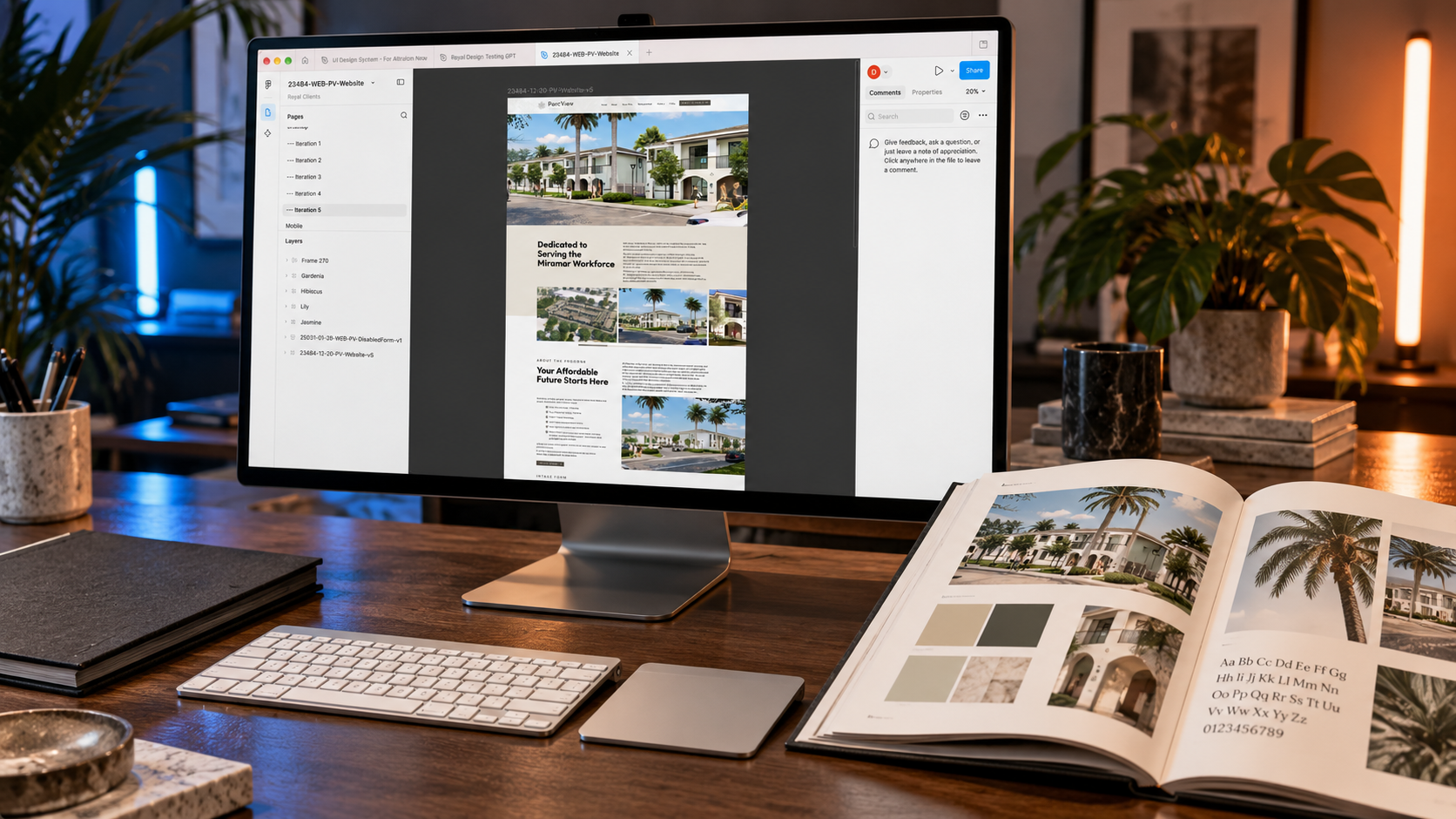
By Content team at Reyal Design, Reyal Design
In the rapidly evolving digital landscape, the necessity for impactful website design has never been greater. Companies aiming for bold brand elevation must strategically employ modern website design strategies that enhance user engagement and conversion rates. This article delves into key principles of contemporary website aesthetics, offering insights on how these strategies can serve to maximize return on investment for brands. Through the exploration of minimalist techniques, responsive design, branding integration, and advanced user experience (UX) practices, businesses can significantly improve their online presence. As companies grapple with increasing competition and demanding audiences, adopting these innovative approaches may provide the competitive edge needed to excel. Key sections of this guide will address current design trends, the intersection of branding and web design, best practices in UX, conversion optimization techniques, and emerging trends for the near future.
What Are the Key Website Design Trends for 2026 Elevating Brands?
Modern website design trends for 2026 emphasize a blend of aesthetics and functionality that directly enhances brand elevation. Trends are increasingly shaped by user preferences and technological advancements, leading to designs that prioritize user experience while remaining visually striking. By exploring these trends, companies can adopt innovative solutions that not only appeal to their audiences but also reflect their brand identity effectively.
Which minimalist web design techniques enhance brand focus?
Minimalist web design techniques strip away unnecessary elements, allowing brands to focus on their core messaging. This approach emphasizes simplicity and clarity, making it easier for visitors to engage with content without distraction. For instance, successful minimalist websites often utilize ample white space and streamlined navigation to guide users through a clean interface, reinforcing brand identity and purpose. By highlighting essential information, brands can cultivate a stark yet impactful presence online.
Research into modern design philosophy demonstrates how simplicity serves as a powerful tool for building emotional brand connections.
Minimalism and Branding Psychology: Strategies for Cohesive Visual Identity This paper examines how the combination of minimalism, semiotics, and branding psychology work seamlessly together to create an inclusive brand with an emotionally resonate visual identity system– a brand that is cohesive and bridges the sub-brands of EurekaFit and Eureka CrossFit. Branding through Semiotics, Minimalism, & Branding Psychology: The EurekaFit Brand, 2026
How does responsive website design improve user engagement?
Responsive web design adapts to various screen sizes and devices, ensuring a seamless user experience across platforms. This adaptability not only enhances user engagement but also improves search engine rankings, as search engines favor mobile-friendly sites. Elements such as flexible grid layouts and responsive images allow for a consistent look and feel, ultimately leading to higher user retention and satisfaction. As mobile internet usage continues to rise, incorporating responsive design strategies becomes increasingly vital for brand success.
How Does Branding Through Web Design Strengthen Brand Identity?
The connection between branding and web design is profound, with visual elements playing a crucial role in shaping audience perceptions. Consistent use of branding elements across a website fosters recognition and trust, as consumers often associate specific aesthetics with quality and authenticity. This section analyzes how employing cohesive branding in web design solidifies a brand’s identity and facilitates deeper connections with users.
What visual identity elements integrate best with modern websites?
Visual identity elements like color schemes, typography, and logo integration are fundamental in defining brand personalities. A well-chosen color palette can evoke emotions and influence user behavior, while typography sets the tone and enhances readability. Moreover, effective logo placement reinforces brand recall, ensuring it remains top-of-mind for visitors. By carefully curating these elements, businesses can convey their unique narratives and values successfully.
Why is storytelling critical for bold brand elevation online?
Storytelling in web design captures the essence of a brand through narratives that resonate with users. By weaving engaging stories into website content, brands can create emotional connections that go beyond product descriptions. This technique encourages visitors to explore more while fostering loyalty and repeat engagement. Using multimedia elements, such as videos and infographics, can further enhance storytelling, making the brand more relatable and memorable.
What Are Best Practices for User Experience Website Optimization?
Optimizing user experience (UX) encompasses a range of practices aimed at facilitating intuitive interactions on websites. An effective UX design is crucial for sustaining user attention and converting visits into tangible actions. This section outlines proven strategies to refine user journeys, minimize friction, and enhance overall satisfaction while using a website.
How do UX strategies drive customer journey and conversion?
Effective UX strategies leverage user-centered design principles that consider the entire customer journey. By analyzing user behavior and preferences, brands can tailor experiences that resonate with their audiences. Implementing streamlined paths for users, such as simplified checkout processes and personalized content recommendations, directly contributes to higher conversion rates. The goal is to enhance usability while guiding users effortlessly along their desired paths.
Which interaction design principles enhance website accessibility and usability?
Interaction design principles such as consistency, feedback, and user control are fundamental to creating accessible websites. Clear navigation, intuitive controls, and easily distinguishable elements ensure users can interact with the site effortlessly. Prioritizing accessibility not only expands the user base but also demonstrates a brand’s commitment to inclusivity. Implementing these principles effectively makes websites more usable for all visitors, including those with disabilities, enhancing overall customer satisfaction.
Which Conversion Optimization Techniques Boost Website Performance?
Conversion optimization focuses on implementing techniques that enhance a website’s performance in converting visitors into customers. By analyzing user interaction data and experimenting with different strategies, brands can optimize their websites for better results. This section discusses proven techniques to drive conversion rates higher by refining both design and user experience.
What layout and call-to-action designs yield higher conversion rates?
Strategically designed layouts with clear call-to-action (CTA) elements are critical for encouraging user engagement. Effective CTAs are visually prominent and use persuasive language, compelling users to take the desired action. Layouts that prioritize content visibility and reduce clutter can guide users toward CTAs more effectively. Research indicates that incorporating contrasting colors for CTAs significantly increases click-through rates, demonstrating that thoughtful design has a measurable impact.
To further refine these design elements, data-driven insights are essential for understanding exactly how visitors interact with your interface.
Leveraging Heat Map Analysis to Maximize Website Conversion Rates For Shopify stores, heat map analysis typically identifies optimizations that improve conversion rates by 15-30% because it reveals the gap between how you designed your pages and how visitors actually use them. Shopify Heat Map Analysis: Complete UX Optimization Guide (2026), 2026
How can clean website development streamline user flow?
Clean website development practices reduce loading times and enhance site performance, contributing to a smoother user flow. Techniques such as optimized image formats, minified scripts, and structured coding can improve loading speeds significantly. By minimizing delays, users are less likely to experience frustration, leading to lower bounce rates and higher engagement. A well-structured website enables users to navigate effortlessly, facilitating better interaction with brand offerings while driving conversion.
What Are Emerging Website Design Trends and Technologies for 2026?
Looking ahead, emerging trends and technologies are set to define the future of website design. Innovations such as artificial intelligence (AI) and increased interactivity will transform how brands connect with their audiences. This section will explore the potential of these developments in shaping the next generation of web design, positioning brands for success in an aggressive market.
How is AI transforming modern website design processes?
AI’s integration into web design simplifies many processes, from personalization to user insights. By leveraging machine learning algorithms, designers can create experiences tailored to individual user behaviors and preferences. For instance, AI-driven analytics enable brands to understand user interactions on a granular level, fostering more strategic design decisions. The future of web design will likely see even deeper integration of AI, creating intelligent systems that evolve with user needs for optimal engagement.
Why is speed optimization critical for brand elevation?
Speed optimization is essential in maintaining user engagement and satisfaction. Studies reveal that even a one-second delay in page loading can result in a significant decrease in conversions and increase bounce rates. As user expectations continue to rise, ensuring rapid load times becomes imperative. Brands that prioritize speed not only enhance their current performance but also establish a reputation for reliability and efficiency in the digital space, further elevating their market position.